

Random vs. Structured Packing: Which Fits Your Column?
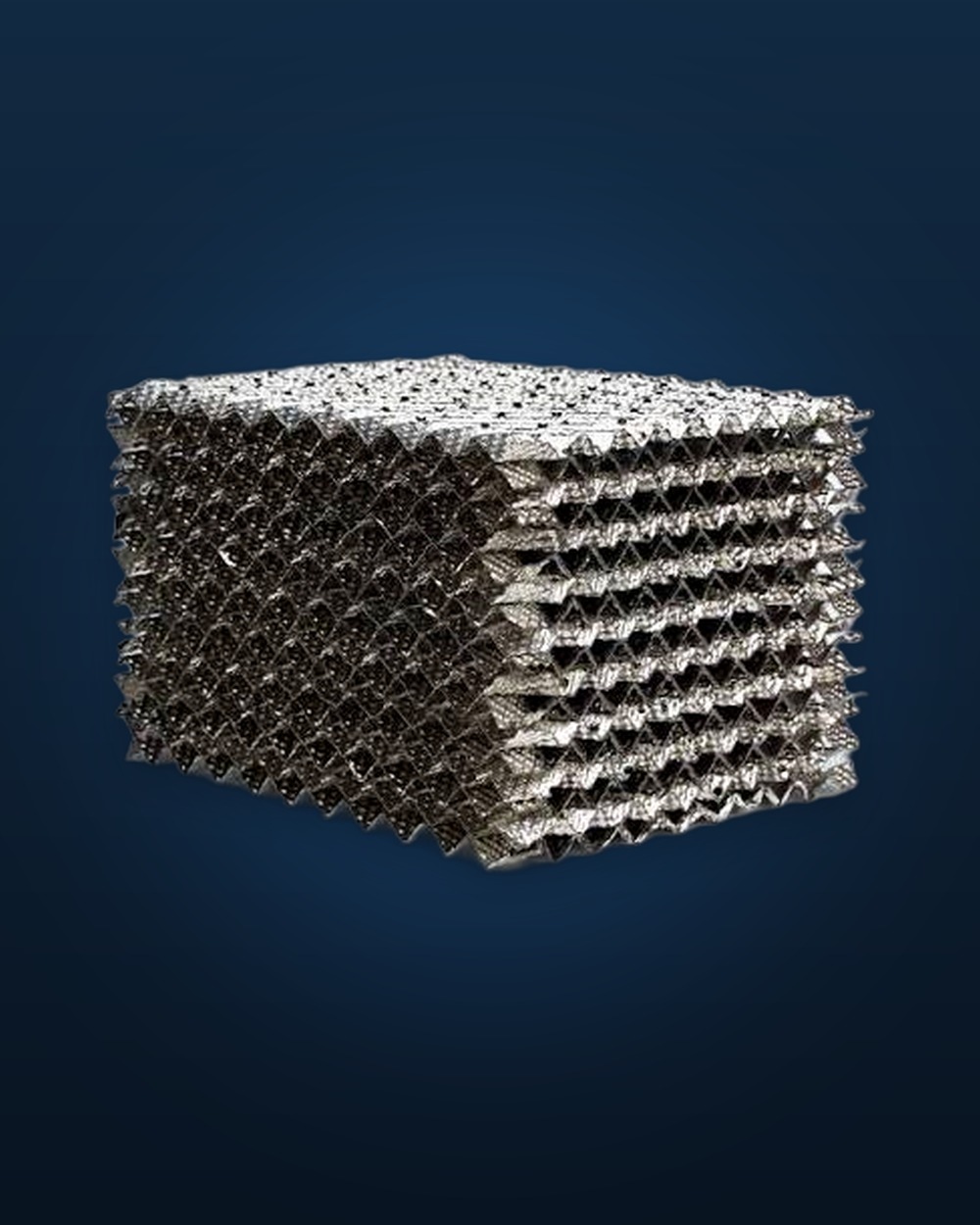
Random and structured packing both work by spreading liquid into thin films across a large surface area, but they get there in different ways and suit different columns.
Random packing
Individual pieces dumped into the bed create a tortuous path with high void fraction. Random packing is economical, tolerant of fouling, easy to install and remove, and available in plastic, metal, and ceramic for almost any chemistry. It is the workhorse for absorption, stripping, and scrubbing.
Structured packing
Corrugated sheets or gauze arranged in precise geometry give a very high number of theoretical stages at remarkably low pressure drop. That makes structured packing the go-to for vacuum distillation, high-purity separations, and capacity or efficiency revamps where every stage and every millibar counts.
A quick rule of thumb
- Need low cost, fouling tolerance, or aggressive-chemistry materials? Lean random.
- Need maximum stages, very low pressure drop, or vacuum service? Lean structured.
- Revamping for capacity or efficiency? Both are options — the right answer depends on the numbers.
M10 supplies both and will run the comparison for your service so the decision is based on your column, not a rule of thumb.
More Resources

How to Select the Right Tower Packing
The right packing balances capacity, efficiency, and durability for your exact service. Here are the factors our engineers weigh on every project.
Read More
Packing Metrics Explained: Surface Area, Void Fraction & Packing Factor
The three numbers on every data sheet — what they actually tell you about capacity, efficiency, and pressure drop.
Read More
M10 Expands the Xtreme Series Ceramic Saddle Line
New XFlow and 7H XFlow ceramic saddles bring higher capacity and efficiency to corrosive, high-temperature towers.
Read MoreHave a Process Challenge?
Our engineering team is ready to recommend and size the right mass transfer solution for your service.