

Packing Metrics Explained: Surface Area, Void Fraction & Packing Factor

Every packing data sheet lists a handful of physical properties. Three of them do most of the work when you are comparing products.
Surface area (ft²/ft³ or m²/m³)
The wetted area available for mass transfer per unit volume of packed bed. More surface area generally means higher efficiency — but often at the cost of a bit more pressure drop, so it is read alongside the other two.
Void fraction (%)
The open space in the bed. A higher void fraction means more room for vapor and liquid to move, which translates to higher capacity and lower pressure drop. Modern high-performance geometries push void fraction as high as the shape allows.
Packing factor (ft⁻¹ or m⁻¹)
A single empirical number that captures how much a packing resists flow — effectively its pressure-drop and flooding tendency. Lower is better: a lower packing factor means higher capacity before flooding. It is the fastest way to rank two packings for hydraulic performance.
Read together, these tell the story: high surface area for efficiency, high void fraction and low packing factor for capacity and low pressure drop. Our data sheets list all three in both US and metric units, and our engineers translate them into a column rating for your service.
More Resources

How to Select the Right Tower Packing
The right packing balances capacity, efficiency, and durability for your exact service. Here are the factors our engineers weigh on every project.
Read More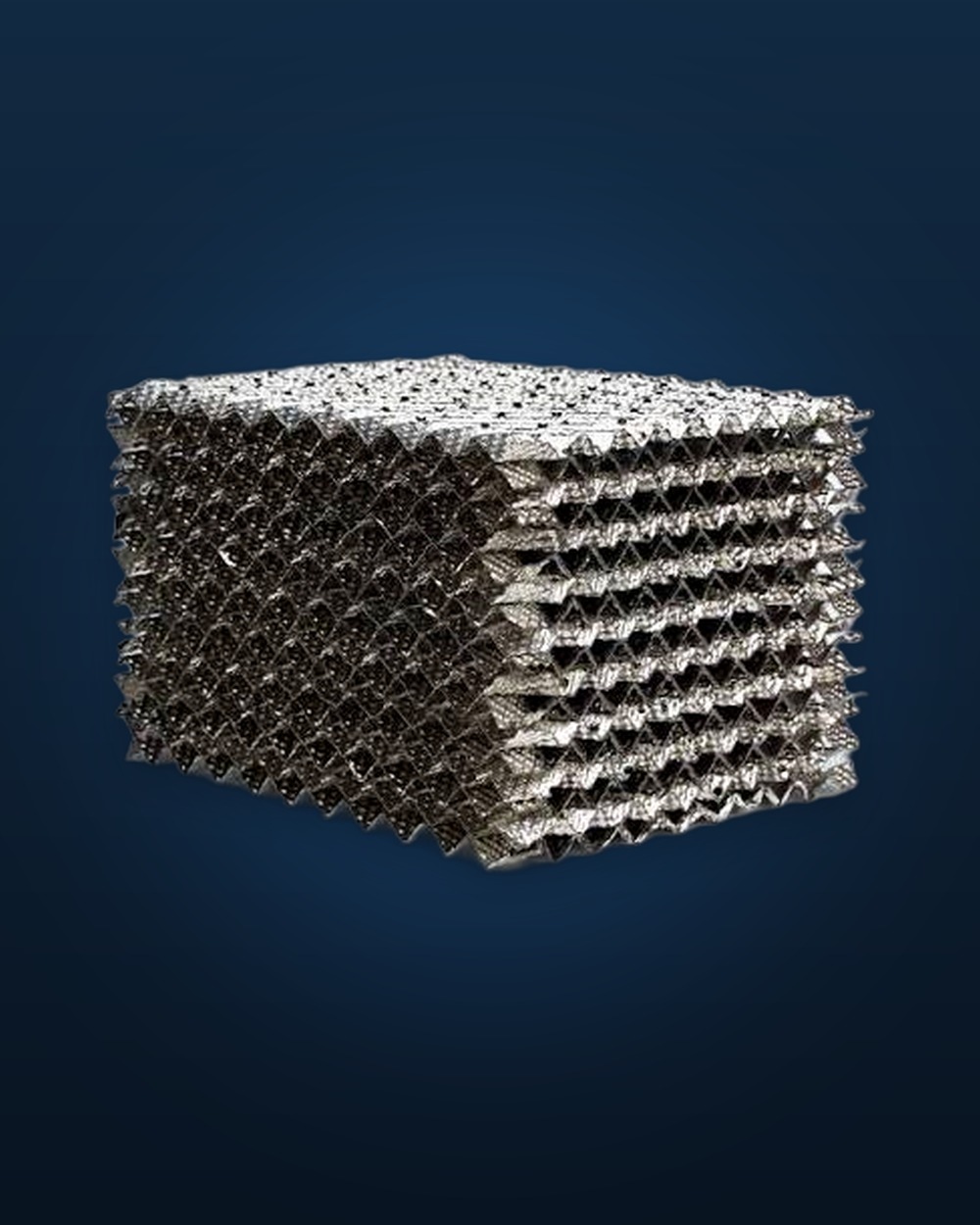
Random vs. Structured Packing: Which Fits Your Column?
Both spread liquid into thin films for mass transfer — but they trade off cost, capacity, pressure drop, and fouling tolerance differently.
Read More
M10 Expands the Xtreme Series Ceramic Saddle Line
New XFlow and 7H XFlow ceramic saddles bring higher capacity and efficiency to corrosive, high-temperature towers.
Read MoreHave a Process Challenge?
Our engineering team is ready to recommend and size the right mass transfer solution for your service.